


Compatibility
Will it work with your device?
Match the port on your device. The highlighted column is the headphone model you have selected.
| Your device | 3.5 mm jackSelected | USB-C |
|---|---|---|
| Phones, tablets and laptopsA 3.5 mm headset socket | Direct connectionUse a compatible headset socket. | Choose the 3.5 mm modelThis port takes a 3.5 mm plug. |
| USB-C phones, tablets and computersIncluding iPhone and iPad models with USB-C | Audio adapter neededUSB-C to 3.5 mm, with headset support. | Check wired-audio supportDevice support for this headset must be checked. |
| iPhone and iPad with LightningA Lightning port | Audio adapter neededLightning to 3.5 mm, with headset support. | Use the 3.5 mm adapter routeNo direct Lightning connection. |
| Desktop computersSeparate headphone and microphone sockets | Splitter for audio + micThe headphone socket alone can play audio. | Use a compatible USB-C audio portIf your computer has one. |
| Game controllers and audio playersA 3.5 mm audio/headset socket | Check device supportUse its compatible 3.5 mm headset socket. | Check USB-C audio supportA charging port alone is not enough. |
Audio, microphone and button support depend on the device, software and adapter. A matching USB-C shape alone does not confirm compatibility. Adapters and splitters are sold separately.
Choose your connector
Keep the calls. Lose the pairing.
You have enough things to keep charged. Your headphones do not need to be one of them.
Connect, press play and get back to the podcast, playlist or person you wanted to hear.
Sound at your ears. Speakers farther away.
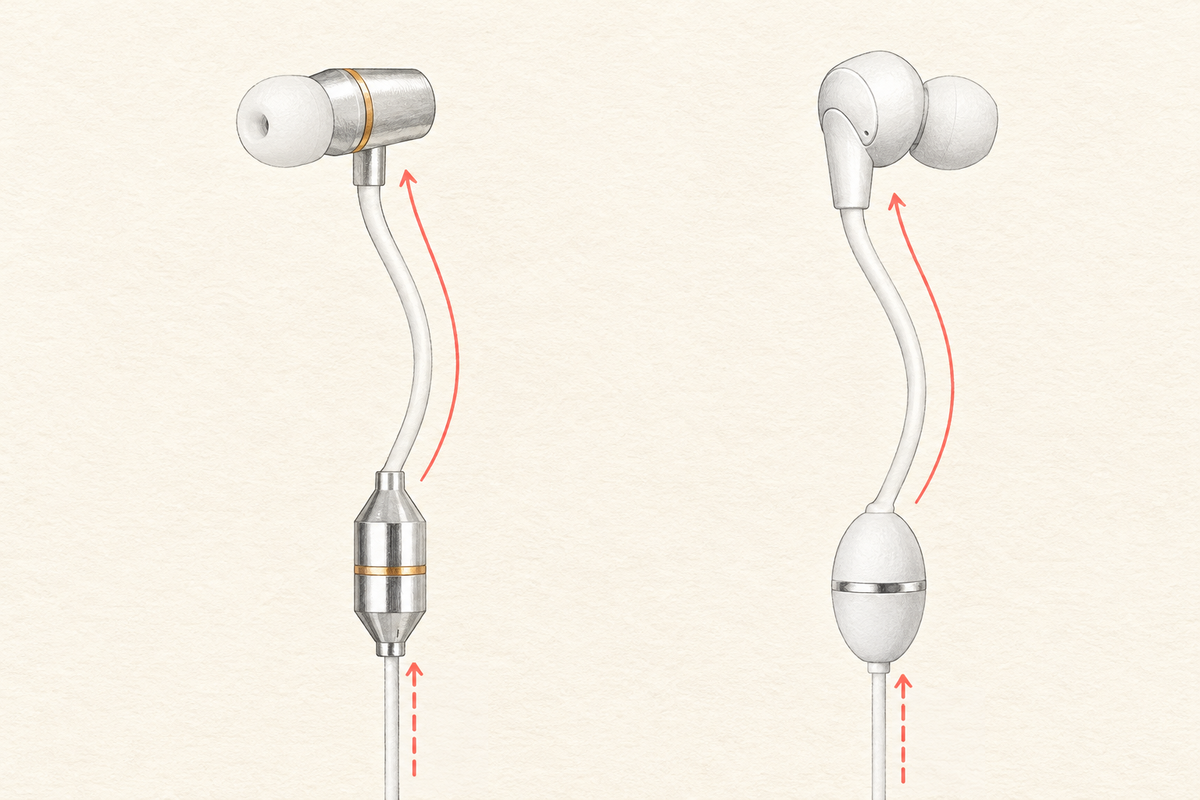
The speakers turn an electrical audio signal into sound. Atmosure places them below the earpieces, then carries that sound through hollow air tubes to your ears.
For EMF-conscious listening, distance is the point: the electrical speakers sit farther from your head. You can also keep your phone on the desk during calls, away from your ear.
Does air tube mean zero EMFs?
No. The speakers and lower cable still use electricity and can produce electromagnetic fields. Magnetic fields generally weaken with distance from their source, but air tubes do not block fields from your phone or surroundings. A significant reduction around the brain has not been verified for these current models.
Less to do. More to listen to.
No pairing. No charging.
No Bluetooth setup. No headphone battery to top up. Plug into a compatible device and start your next listen.
Take the call. Keep your hands free.
The inline microphone lets you speak while your phone stays on the desk. The controls sit on the cable, within reach.
Microphone and button support depend on your device and any adapter.
A fit you can adjust.
Soft silicone tips sit in your ears. Removable ear hooks add support, and the clip helps keep the cable from hanging loose.
Settle in for a call, or keep listening while you move between tasks.
See the fit tips
Seat the tips gently. Add the removable hooks if you want more support. Attach the clip to your clothing with some cable slack above it.
Keep the air tubes free of sharp bends. Start at a low volume and adjust only as needed.
Pack up. Pick up where you left off.
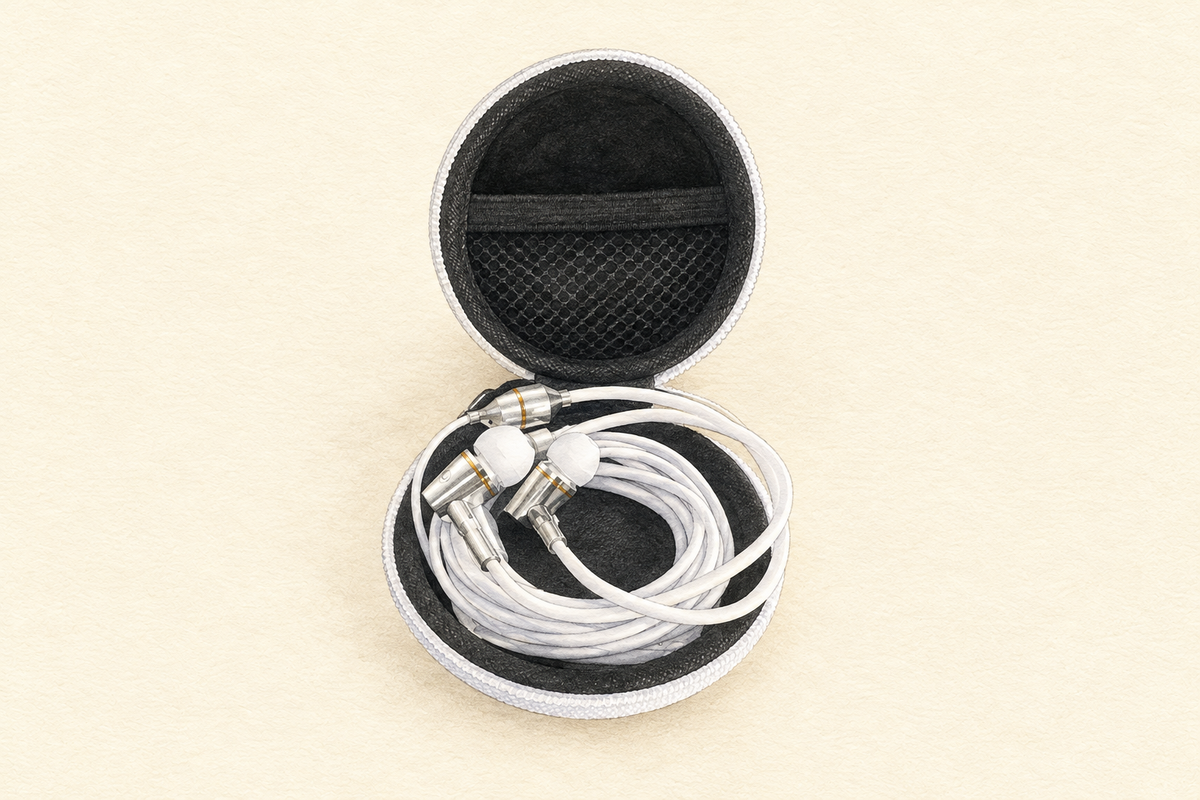
The zip case keeps your headphones and small accessories together, ready for the next listen.
Your 3.5 mm set includes the headphones, case, two spare tips, removable ear hooks and a clip. The fitted pair of tips is already on the headphones.
Which connector should I choose?
Choose 3.5 mm for a compatible headphone socket. Choose USB-C for a port that supports compatible wired audio.
For calls through an adapter, check that it supports a headset microphone. A charging-only adapter is not enough.
Can I take calls?
Both current models have an inline microphone and controls. Sound, microphone and button support depend on the device and any adapter.
Are these the same headphones with a different plug?
No. The 3.5 mm and current USB-C models have different earpieces, speaker housings and controllers. The photos and connector label help you choose the right model.
What do I do when they arrive?
Match the plug to a compatible audio port. Seat the tips gently, leave the tubes free of sharp bends and start at a low volume.
The fit tips above stay right here on this page.
Make your next listen a wired one.
Pick your connector. Bring your music, podcasts and calls along.